
Americas Family Caregivers Crisis
This CRISIS IS GROWING every day! Why middle‑income seniors — and their Family Caregivers who love them — are being left behind?
FAMILY CAREGIVERS
Joel Inocencio
6/11/20265 min read


I personally invite you to join me in discussing this proposal on our FB (Meta) page. Link Here: Aging Happily
The Hard Truth
Millions of seniors who spent their lives contributing to the economy are now too rich for Medicaid but too poor for private care. Their families are forced to sacrifice everything just to keep them safe.
The Forgotten Middle
These are seniors who:
Worked hard
Paid taxes
Raised families
Played by the rules
But now face retirement with not enough to survive.
This is the group nobody talks about.
The Burden Falls on Family Caregivers
When seniors can’t afford long‑term care, the responsibility shifts to the family. Adult children give up:
Careers
Income
Health
Stability
Their own retirement
And yet…there is no federal safety net for them.
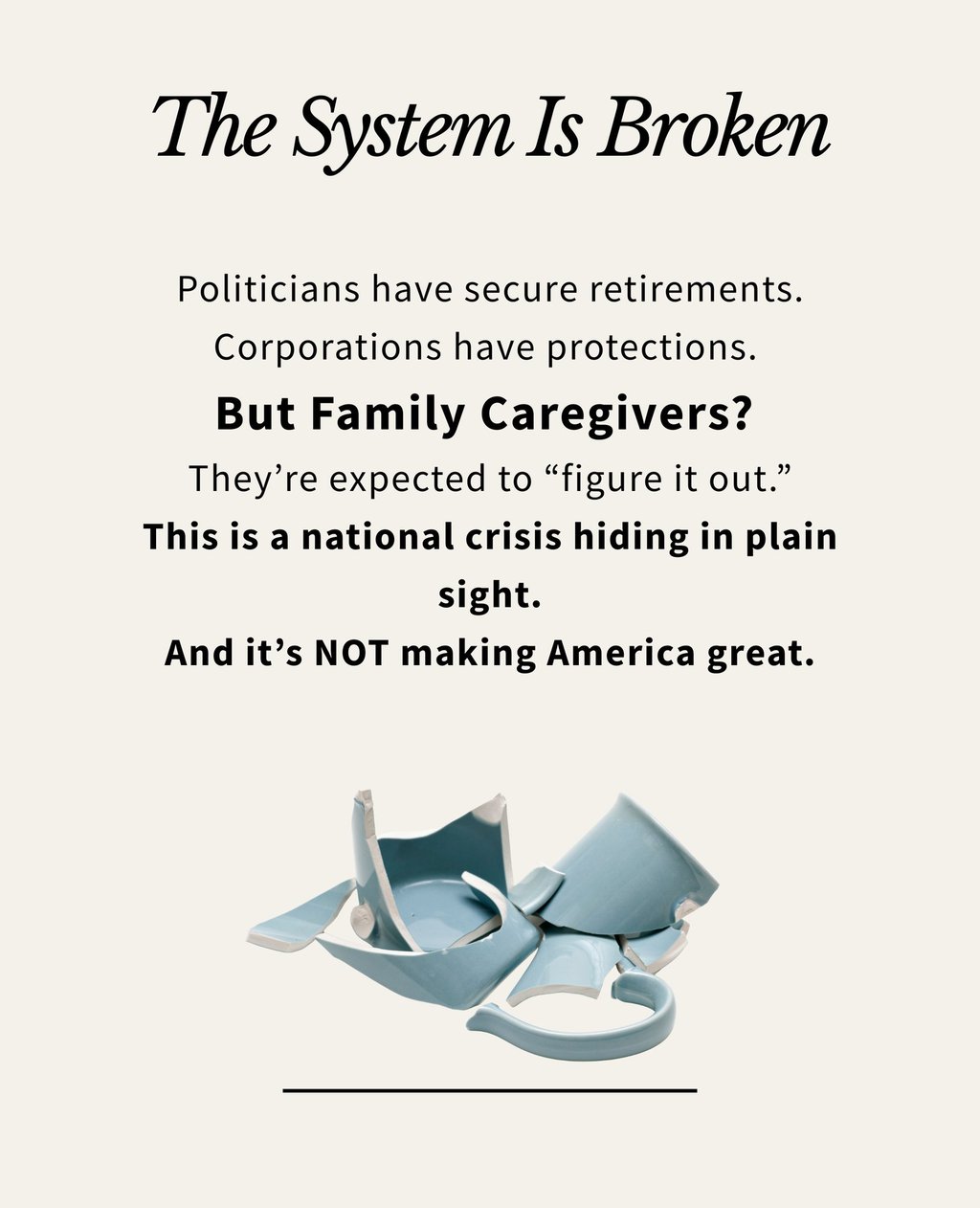
Supporting family caregivers requires more than compassion — it requires systems, partnerships, and practical tools.
Family caregivers quietly sustain one of the largest and most essential healthcare systems in the United States: the unpaid care economy. Millions of Americans are caring for aging parents, spouses, and loved ones with chronic conditions — often with little training, no compensation, and minimal support.
Caregiver Action Network data shows that family caregivers provide billions of hours of unpaid care each year, often at the expense of their own health, finances, and emotional well‑being. Many juggle full‑time jobs, interrupted sleep, medical tasks, and the emotional weight of watching someone they love decline.
This is not a niche issue.
This is a national crisis!
Middle-income seniors and their families are the ones getting the short end of the stick.
Somebody needs to lobby for this group.
As a Family Cargiver Advocate, the Aging Happily Resource presents a proposal.
🟧 A National Public–Private Partnership for Caregiving Support
A coordinated response is long overdue. Family Caregivers provide more unpaid care than the combined home‑care and nursing‑home industries, yet they receive a fraction of the support.
A public–private partnership could combine:
Government funding for respite care, caregiver stipends, and training
Private‑sector innovation in home‑safety tech, meal delivery, transportation, and digital tools
Tax incentives for companies that support caregiver employees
Community‑based caregiver hubs offering education, respite, and mental‑health support
This model mirrors successful collaborations in disaster response and public health. Caregiving deserves the same urgency.
Proposal #1: A National Caregiver Stipend
Family caregivers provide $600B in unpaid labor every year. It’s time to compensate them.
A federal stipend would:
Reduce burnout
Prevent poverty
Keep seniors at home longer
Strengthen the workforce
Learn more: National Caregiver Stipend along with proposed guardrails against potential fraud and abuse.
Proposal #2: Middle‑Income Long‑Term Care Subsidy
A program for families who fall into the “Medicaid gap.” This would help seniors who:
Don’t qualify for Medicaid
Can’t afford private care
Need support to age safely
This is the missing middle of American aging policy.
Proposal #3: Tax Credits
Family Caregivers should receive meaningful federal tax credits for:
Lost income
Out‑of‑pocket expenses
Home modifications
Medical supplies
Transportation
This is basic fairness.
Proposal #4: A National Caregiver Bill of Rights
Family Caregivers deserve:
Training Mental health support
Respite
Legal protections
Recognition
A voice in policy decisions
This crisis touches every family — yet caregivers remain invisible.
Proposal #5: 🟧 Nursing Schools Should Require In‑Home Geriatric Training
Most care happens not in hospitals — but in living rooms, bedrooms, and kitchens. Yet nursing programs often underemphasize home‑based geriatric care.
A practical, scalable solution:
✔ Require 80 hours of in‑home caregiving affiliation for nursing students.
This would:
Provide immediate respite to overwhelmed caregivers.
Give students real‑world experience with dementia care, mobility support, and medication routines.
Build empathy and communication skills.
Strengthen the workforce pipeline for home‑based care.
This is achievable, cost‑effective, and aligned with the future of healthcare.
Proposal #6: 🟧 Culinary Schools Can Become Partners in Senior Nutrition
Meal planning for seniors — especially those with chronic conditions — is one of the most time‑consuming tasks Family Caregivers face.
Culinary schools can help by integrating:
Senior‑focused nutrition modules
Meal‑prep practicums for older adults
Community service hours preparing meals for homebound seniors
Partnerships with caregiver organizations to deliver weekly meal kits
This gives students real‑world experience while giving caregivers time, relief, and peace of mind.
Proposal #7: 🟧 Colleges and Universities Can Protect Seniors From Online Fraud
Online scams targeting seniors are exploding. Many older adults struggle with digital literacy, and Family Caregivers often spend hours managing passwords, accounts, and online safety.
Imagine if colleges required students to complete service hours assisting seniors with online tasks, such as:
Setting up secure devices
Teaching basic digital skills
Helping with telehealth portals
Identifying and avoiding scams
Reviewing suspicious emails
Setting up fraud alerts and password managers
This reduces caregiver workload, protects seniors, and builds intergenerational connections.
Proposal #8: 🟧 Community‑Based Micro‑Support Systems
Communities can implement micro‑solutions that make caregiving more sustainable:
Volunteer respite networks
Faith‑based caregiver support teams
Neighborhood “care circles.”
Senior tech‑help support for online productivity/hobby
Local caregiver skill‑building workshops
These programs don’t require massive budgets — just coordination and commitment.
Financial Empowerment for Family Caregivers
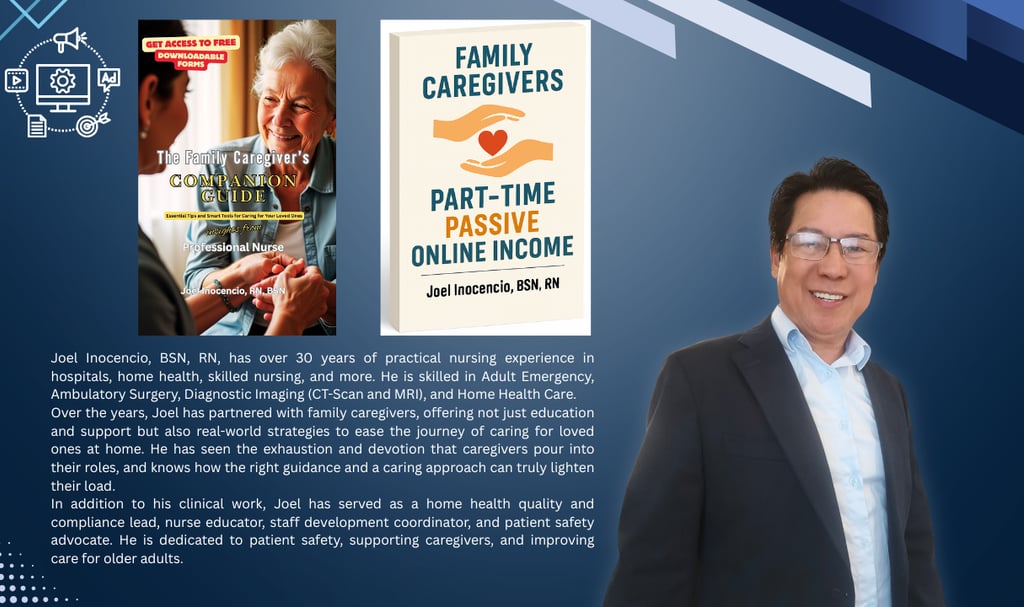
We did a small part in helping provide a solution by publishing a practical and affordable eBook,
How to Earn Passive Part-time Income Selling Digital Downloads: Available here
It is a powerful tool for Family Caregivers who need flexible, low‑stress income options.
It teaches Family Caregivers how to:
Create digital products with zero to low cost investment
How to find and use FREE AI tools for research and content creation.
Sell on Etsy with no inventory and no cost.
Build income in 5–15 minute pockets of their downtime.
This is exactly the kind of practical, real‑world resource Family Caregivers need to earn passive income during their downtime.
Practical Tools for Daily Caregiving
Our published resource,
The Family Caregiver’s Companion Guide: Checklists, Routines, and Red Flags for Caring for a Loved One at Home; available in Paperback or Kindle on Amazon.
It is another essential support tool.
It gives Family Caregivers:
Daily routines
Medication and symptom checklists
Red‑flag warnings
Burnout prevention strategies
Emergency readiness tools
Practical workflows designed by a nurse
This guide reduces stress, improves safety, and helps Family Caregivers feel more confident and prepared.
Together, our two published works form a powerful foundation for Family Caregivers who need both income stability and a daily care structure.
The Path Forward: A Multi‑Sector, Human‑Centered Caregiving System
Supporting Family Caregivers requires more than prayer and sympathy. It requires:
Government action
Private‑sector innovation
Educational system involvement
Community‑based support
Financial empowerment
Practical tools and guides
Intergenerational collaboration
Caregiving is not a “family issue.”
It is a societal responsibility.
And with bold, realistic, multi‑sector action — combined with practical tools like our published guides — we can build a future where Family Caregivers are supported, seniors are protected, and families are no longer forced to carry this burden alone.
Contact
Questions or thoughts?
admin@aginghappilyresource.com
© 2025.
Aging Happily Resource.
All rights reserved.