
"When Accusations Hurt: How Emotional Intelligence Protects Family Caregivers from Burnout."
"When the person you love looks at you with suspicion, the sting is real. Discover how Emotional Intelligence (EQ) can become your greatest shield—helping you navigate the heartbreaking accusations and personality changes that come with memory loss. Learn gentle, proven strategies to protect your heart, regain your calm, and prevent the deep exhaustion of caregiver burnout." Dealing with unfair accusations—often from the very person you're caring for—requires a level of EQ that is rarely discussed.
Joel Inocencio
3/10/20265 min read


Learn how emotional intelligence (EQ) helps family caregivers cope with accusations, suspicion, and personality changes in loved ones with Alzheimer’s or memory loss. Evidence‑aligned strategies to prevent burnout and emotional pain.
What is Emotional Intelligence or EQ
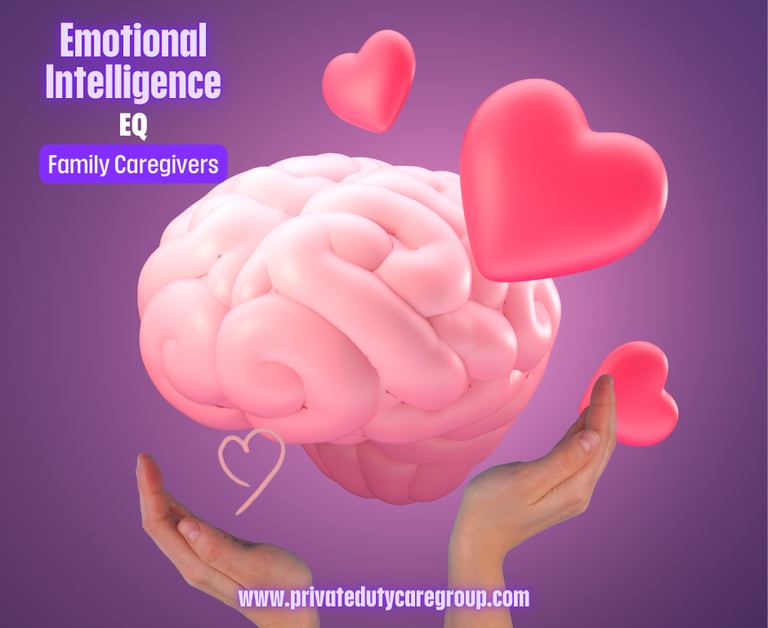
Emotional Intelligence (EQ) is the ability to understand and manage your own feelings while also recognizing and responding effectively to the feelings of others.
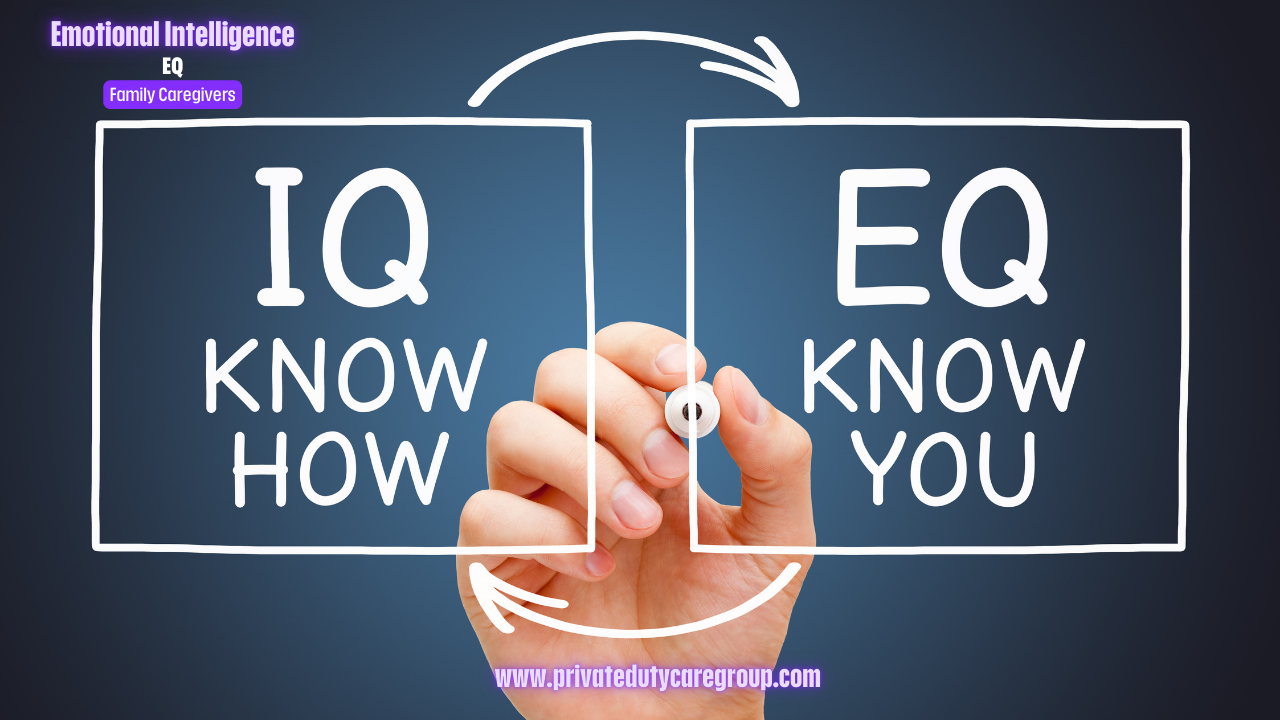
In its simplest form, it is "being smart with feelings". While your IQ measures how well you process logic and facts, your EQ measures how well you handle emotions to communicate better, solve problems, and build stronger relationships.
The 5 Simple Parts of EQ
Psychologists generally break EQ down into these five areas:
Self-Awareness: Knowing exactly what you are feeling and why. It is noticing, for example, that you are frustrated before you start acting on that frustration.
Self-Regulation: Managing your reactions. Instead of shouting when you're angry, you pause, breathe, and choose a calm way to respond.
Motivation: Working toward your goals because you care about them deep down, not just for a paycheck or a prize.
Empathy: Being able to "read the room" and understand how someone else is feeling, even if you don't agree with them.
Social: Using your emotional awareness to get along with others, handle conflicts, and work well in a team.
Why It Matters
A high EQ helps you stay calm under pressure and relate to almost anyone you meet. In fact, research suggests that for many jobs, your EQ can be a better predictor of success than your IQ.
When love meets confusion ...
If you’ve ever cared for a loved one with Alzheimer’s or memory loss, you know the moment that changes everything. The moment when the person you’ve fed, bathed, protected, and advocated for suddenly looks at you with suspicion and says:
“You stole from me.”
“You’re lying.”
“You’re trying to hurt me.”
Even when you know it’s the disease talking, the pain hits deep. It feels personal — because it used to be personal.
But here’s what dementia‑care experts and caregiver research consistently emphasize:
Accusations are symptoms of brain changes, not reflections of your character. One of the strongest tools for protecting your emotional well-being is emotional intelligence (EQ).
Not the soft, inspirational kind — but the grounded, practical EQ skills that help you stay steady, compassionate, and intact when the disease tries to pull you into emotional chaos.
Alzheimer’s and related dementias change how the brain processes:
Memory
Logic
Perception
Time
Safety cues
When the brain can’t make sense of missing information, it fills in the blanks — often with fear‑based explanations.
This leads to:
Misplaced items → “Someone stole from me.”
Confusion → “You’re lying to me.”
Fear → “You’re trying to harm me.”
Loss of independence → “You’re controlling me.”
As people age, and especially with dementia, the brain changes how it handles memory, logic, perception, and safety. When the brain cannot make sense of missing information, it often fills the gaps with fear-based explanations.
Common behaviors include:
Suspicion
False accusations
Paranoia
Misinterpretation
Emotional outbursts
These behaviors are neurological, not personal. This understanding is the foundation of EQ‑based protection.
Understanding this doesn’t erase the sting, but it gives you a crucial emotional buffer:
It’s not personal. It’s neurological.
This reframing is widely taught in dementia‑care education because it reduces caregiver guilt, shame, and emotional overload — all major contributors to burnout.
🧠 Why Dementia Causes Suspicion and Accusations
🌱 EQ Skill #1: Recognize and Identify Your Emotions
Caregivers often try to “stay strong,” but unspoken emotions don’t disappear — they accumulate.
EQ begins with self-awareness:
“I feel hurt.”
“I feel accused.”
“I feel exhausted.”
“I feel unappreciated.”
Naming emotions reduces their intensity and helps you respond instead of react.
Try this: At the end of each day, write down three emotions you felt. No judgment. Just acknowledgment.
🌤 EQ Skill #2: Reframe — The Heart of “Not Taking It Personally”
Reframing doesn’t mean pretending it doesn’t hurt. It means shifting the meaning so the pain doesn’t define you.
Instead of: “How could s/he say that after everything I’ve done?”
Try: “Their brain is trying to make sense of fear and confusion. I’m the safest person to express it to.”
This shift protects your emotional stability and prevents the spiral into resentment or self‑blame.
🌾 EQ Skill #3: Respond to the Emotion, Not the Accusation
Arguing facts rarely works with dementia. But responding to the emotion behind the accusation often does.
Try phrases like:
“It sounds like you’re worried something is missing.”
“You seem upset. Let’s look together.”
“I hear that you’re scared. I’m here with you.”
This approach is widely recommended in dementia communication training because it de‑escalates fear instead of escalating conflict.
🌙 EQ Skill #4: Boundaries Protect Your Energy
EQ isn’t just empathy — it’s also self-protection.
Healthy boundaries might look like:
Stepping out of the room for a few minutes
Asking another family member to take over
Scheduling respite care
Saying, “I need a moment, but I’ll be back.”
Caregiver burnout research consistently shows that breaks are not optional — they’re protective.
🌼 EQ Skill #5: Compassion for Them AND for Yourself
You can hold two truths at once:
Your loved one is scared and confused.
You are hurting and deserve support.
EQ helps you stay connected without losing yourself.
🌟 Final Message
If you’ve been accused, yelled at, or blamed by someone you love who is living with dementia, you are not alone — and you are not failing.
Emotional intelligence won’t erase the pain, but it will:
Protect your sense of self
Reduce burnout
Improve communication
Help you stay grounded
Make caregiving more sustainable
You deserve care, too.
You made it this far. Thank you for your time and your curiosity about EQ.
Come hang out with me on Facebook (yep, Meta if you’re fancy) and let’s keep swapping stories, tips, and maybe a few memes about beating burnout—because nobody should have to tackle it alone.
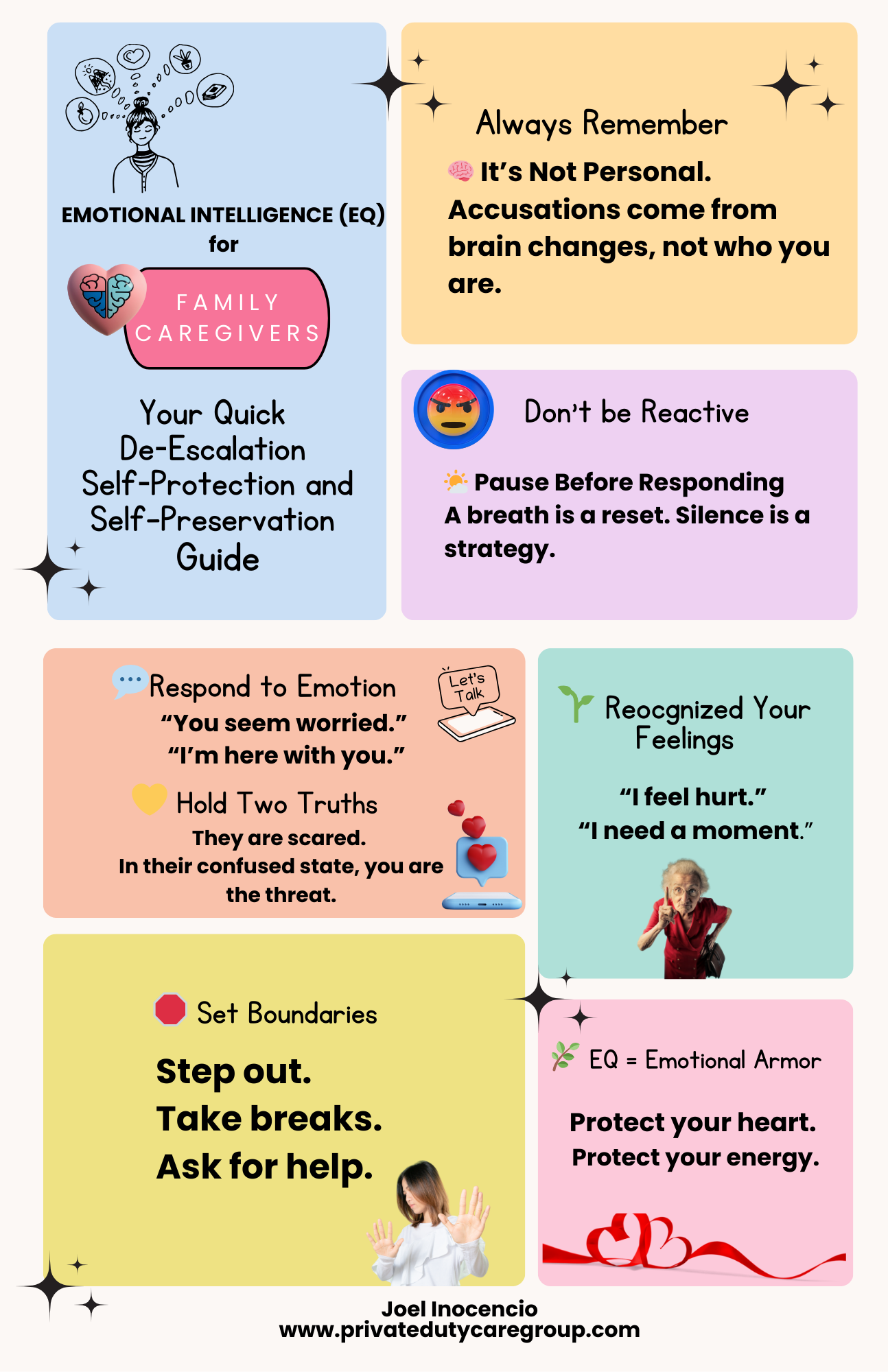
Download the FREE poster below. Store the file on a thumb drive (USB Flash Drive), bring it to Staples, and, for less than $3, you can have your high-resolution copy. Post it on a board or wall visible to you as a daily reminder of the powerful tool you already possess: your EQ.
Contact
Questions or thoughts?
admin@aginghappilyresource.com
© 2025.
Aging Happily Resource.
All rights reserved.