Ibogaine Straight Talk
Ibogaine: A Neutral, Evidence‑Based Look at a Controversial Addiction and Mental Health Intervention
Joel Inocencio
4/21/20269 min read
Before we begin, a gentle reminder from years of working in healthcare, education, and my advocacy for support to millions of struggling family caregivers:
These are my understanding of the available data from an active research study.
Every human body is unique. Every nervous system, every trauma history, every heart rhythm responds differently to medications, supplements, and psychoactive compounds. Even when a treatment looks promising—or has helped many people—there is no universal response.
The information in this article is for informational purposes, not medical advice. Ibogaine carries both potential benefits and real risks. It remains illegal in several countries, including the United States, and should never be used without proper medical supervision.
My goal is simple: To give you a clear, factual, easy‑to‑understand breakdown of a topic that has resurfaced in public conversation and deserves to be discussed with honesty, nuance, and respect. I encourage you to practice due diligence, consult qualified professionals, and make decisions grounded in both evidence and personal safety.
The Controversial Exchange That Sparked Renewed Public Interest
Ibogaine entered mainstream conversation again after a widely discussed claim involving podcast host Joe Rogan and President Donald Trump. According to Rogan’s public statements, he shared data suggesting that ibogaine may interrupt addiction, citing reports that:
A single dose reportedly helps more than 80% of people
Two doses reportedly help more than 90%
These numbers reflect claims from ibogaine‑supportive communities, not conclusions from large‑scale clinical trials.
Rogan stated that after he sent the information, President Trump responded almost immediately with a message along the lines of:
“Sounds great. Do you want FDA approval? Let’s do it.”
According to Rogan, this exchange eventually led to:
His visit to the White House
A meeting with Dr. Mehmet Oz
A discussion about ibogaine’s potential role in addiction treatment
Public statements expressing interest in exploring FDA approval
These are reported conversations, not formal policy decisions. The FDA has not approved ibogaine.
Rogan's meeting with the President of the United States simply brought the conversation back into public view — and for many people, it raised more questions than answers.
That is why this article was published: not to promote or debunk, but to translate a complex, emotionally charged topic into language that everyday people can understand.
With that said, let's get going!
What Is Ibogaine?
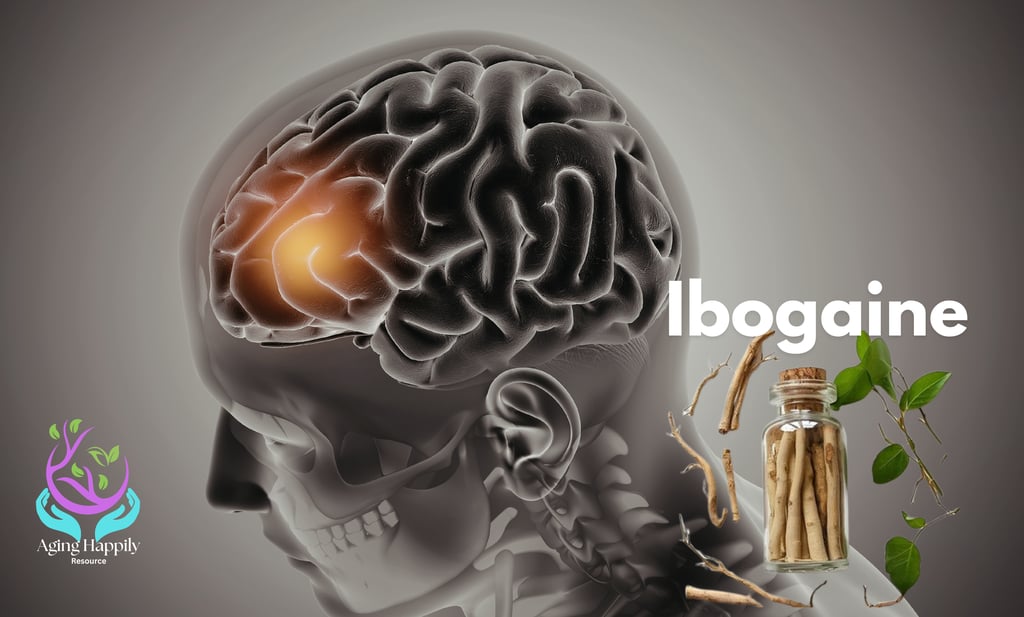
Ibogaine is a naturally occurring psychoactive indole alkaloid derived from the root bark of the West African Shrub Tabernanthe iboga, a shrub native to West Central Africa.
For centuries, it has been used ceremonially within the Bwiti spiritual tradition of Gabon.
It is primarily investigated for its unique ability to act as an "addiction interrupter," rapidly alleviating withdrawal symptoms and curbing cravings for substances like opioids, cocaine, and alcohol.
In modern times, ibogaine has gained attention for its reported ability to interrupt addiction cycles, especially in opioid use disorder or OUD.
Primary Uses
In Addiction Treatment:
It is used globally (though illegal in the U.S.) to treat opioid use disorder and other substance use disorders.
Clinical observations indicate it can drastically reduce the severity of acute withdrawal.
Many individuals report that ibogaine dramatically reduces withdrawal symptoms and cravings. Observational data suggests it may “interrupt” addiction patterns.
In Mental Health:
Recent research suggests potential benefits for treatment-resistant PTSD, depression, and anxiety, particularly in veterans with traumatic brain injuries or TBI.
In Spiritual and African Traditional Natural Remedy:
It is traditionally used as a sacrament in the Bwiti religion in Gabon for initiation and healing ceremonies.
A Stanford Medicine study (2024–2025) found significant reductions in PTSD, depression, and anxiety among veterans with traumatic brain injuries.
How Does Ibogaine Work:
A Polypharmacological Profile: Ibogaine interacts with multiple systems at once. One of the most discussed mechanisms is its effect on GDNF (Glial Cell Line‑Derived Neurotrophic Factor), a protein involved in dopamine repair.
Stop right here, my friend.
I want you to meet GDNF—the powerhouse that gives your brain the muscle to fight back and win.
To understand this, imagine your brain as a giant social network—a mix of TikTok, Snapchat, and your group chats.
Inside that network, dopamine is the “feel‑good” message that tells you:
This is fun, exciting, and so rewarding that your brain literally says, do that again!
Unfortunately, addiction glitches the system.
You want more fun, more thrill. But the dopamine messages stop working normally.
Then, in your usual routine of enjoyable expectations, things become boring and no longer feel enjoyable.
Your brain starts to chase bigger hits just to feel normal.
It’s no longer about feeling good anymore—it’s about survival to achieve the highs, the hits, the craving, uh, you know what I mean?
And here’s the deeper emotional truth behind that process:
“Eventually, when the usual feelings no longer feel strong enough to satisfy the longing, the inner self starts craving more.
It wants a bigger rush, a louder signal, a higher volume — and it keeps getting disappointed.
The brain keeps asking for more stimulation than dopamine can naturally deliver. Over time, the dopamine system becomes overwhelmed and stops responding as it used to.
That’s when the glitches begin spiraling into a storm of cravings, frustration, and emotional chaos.
This is where GDNF becomes important — it helps repair the system so the brain can function normally again.”
It's where GDNF steps up. And this is where the comeback begins. GDNF is your brain’s repair crew.
The reboot button.
The reset you’ve been searching for. When GDNF rises, your brain gets to work. It starts rebuilding.
It starts healing by repairing damaged dopamine neurons, rebuilding broken reward pathways, and resetting your system to its pre‑addiction state.
Ibogaine triggers a surge of GDNF in the VTA, the brain’s dopamine control center.
Think of it like this: **If your dopamine system is a phone that’s lagging, overheating, and glitching because of too much junk that's gumming up the system… GDNF is the deep repair program that cleans it up and helps it run normally again.
However, GDNF doesn’t fix everything. It won’t do the work for you. It won’t replace the power of your daily choices.
But it gives your brain a fighting chance to reset. It opens the door for real change.
Now, let's take this deeper into the cellular level, beyond GDNF. If you don't mind.
Cellular Mechanism of Action:
Ibogaine has a remarkably complex "polypharmacological" profile, meaning it interacts with many different receptors simultaneously.
At the cellular level, it works through several key pathways: Root Healing.
GDNF Upregulation:
Ibogaine flips a powerful switch in the brain. It boosts GDNF—a protein that helps your brain’s reward system heal and rebuild.
It’s like hitting reset, giving you a shot at life before addiction.
Transporter Inhibition:
SERT (Serotonin transporter ) & DAT (Dopamine transporter ).
Ibogaine changes how your brain handles serotonin and dopamine. It doesn’t just patch things up—it stabilizes the system, helping your brain recycle these key chemicals in a new way.
Nicotinic Receptor Antagonism:
It specifically blocks nicotinic acetylcholine receptors. These are the same switches that make nicotine addictive and drive the physical pain of opioid withdrawal.
NMDA Antagonism:
Ibogaine also blocks NMDA (N-methyl D-aspartate), a glutamatergic receptor, just like ketamine, a drug which has been found to be effective in the treatment of severe depression.
This helps break the brain’s old patterns—the memories and triggers that keep people stuck in addiction.
Opioid Receptor Modulation:
It interacts with mu (morphine) and k (kappa) opioid receptors.
While its metabolite, noribogaine, is a potent K-opioid agonist (likely contributing to its hallucinogenic effects), ibogaine itself may act as a weak antagonist at mu-receptors, helping block the high from other opioids and giving you a fighting chance to break free.
I hope that's understood well.
Ok, let's move on.
The “Reset” Model
Ibogaine doesn’t just work in the background.
It moves through your system in four powerful phases—each one designed to reset, repair, and rebuild.
First, it hits the circuit breaker.
Withdrawal distress?
Cut.
You get a moment to breathe, to reset, to remember what calm feels like.
Next, it resets your reward baseline. Your brain’s dopamine system gets recalibrated, giving you a shot at real balance—maybe for the first time in years.
Then comes repair mode. Your brain’s own growth factors—GDNF and BDNF—kick in, rebuilding what addiction tried to destroy.
Finally, noribogaine steps in as your safety net, holding your mood steady for weeks so you can focus on building a new foundation.
Perhaps the latest report from the Stanford study is what Joe Rogan was referring to when he challenged the President, because when you see results like these, you can’t ignore them.
The Stanford Study.
Here’s what the brain scans revealed: Increased theta waves (linked to neuroplasticity) and reduced stress‑related cortical activity.
Featured Scientific Study:
Ibogaine and Neuroplasticity.
A significant study published in Nature Medicine (2024) and expanded in Nature Mental Health (2025) by researchers at Stanford Medicine analyzed 30 special operations veterans with severe TBI and PTSD.
Stanford Medicine Findings:
One month after a single ibogaine treatment, participants experienced an 88% reduction in PTSD symptoms, an 87% reduction in depression, and an 81% reduction in anxiety.
On a cellular level, the scans showed something powerful:
Ibogaine boosts theta brain waves—the same waves that unlock neuroplasticity and mental flexibility.
At the same time, it dials down the brain’s stress circuits, giving you a shot at real, lasting change.
Though promising, there are concerns that need to be addressed.
The Safety and Risks Discovered During the Study.
So, let’s get real—ibogaine isn’t magic. It comes with serious risks you can’t afford to ignore.
One of the potential side effects discovered was:
Cardiotoxicity.
Ibogaine was found to inhibit hERG potassium channels, which can prolong the QT interval and lead to potentially fatal arrhythmias, such as torsades de pointes.
Let's talk about that in a bit.
Neurotoxicity:
At very high doses (typically above therapeutic ranges), animal studies have shown it can cause degeneration of Purkinje cells in the cerebellum, leading to tremors and coordination issues (ataxia).
So what exactly is this deadly heart rhythm everyone’s talking about?
To understand how ibogaine impacts your heart, you need to see the electrical reset that happens after every heartbeat.
This is where the danger—and the lesson—lies.
First, the Potassium "Exit" (In Normal Functioning heart).
With every beat, your heart’s cells trade electrolytes, building the charge that keeps you alive.
After each contraction, your heart needs to reset—repolarize—so it’s ready for the next round.
The hERG potassium channel is the exit door, allowing potassium to flow out so the reset can occur.
What does it have to do with ibogaine's action?
The next finding is about the "Blockage" it causes.
Ibogaine steps in and jams that exit door.
It blocks the hERG channel, slowing potassium’s escape and throwing off your heart’s rhythm.
Now, potassium can’t get out fast enough. The heart cell stays charged too long, and the system starts to break down.
On an EKG, this delay shows up as a stretched-out QT interval. The longer the doors stay blocked, the more dangerous it gets.
Similar to Electrical "Traffic Light Jam.
"When the QT interval drags on, your heart’s electrical system turns unstable.
Imagine a traffic light stuck on yellow—sooner or later, someone loses patience and pushes through, then chaos hits.
If a new heartbeat fires before the last one resets, you get a collision—an electrical pileup that can be deadly.
This is how Torsades de Pointes (The Result) occurs.
What the hell is that?
Well, I'll tell you what!
The collision that triggers Torsades de Pointes (French for "twisting of the points"). That's why I mentioned it as a fatal arrhythmia.
Instead of that steady thump-thump, your heart’s lower chambers start to quiver and twist, losing their rhythm and their power.
When your heart is just vibrating, not pumping, blood stops flowing to your brain. Oxygen supply drops dangerously low.
That’s when you risk fainting, seizures, or sudden cardiac arrest.
That’s why you need medical supervision and EKG monitoring if you’re considering ibogaine.
Especially for those who have heart issues or low electrolytes, this risk goes through the roof.
Bottom line: don’t go it alone. Medical supervision isn’t optional—it’s essential.
Let’s get back to the big picture.
Why the Debate Is Polarized?
Critics emphasize:
Cardiac risks.
Lack of large trials.
Largely unregulated.
Supporters emphasize:
Observational data.
Recent Study Published
Neurotrophic effects.
Urgency of the opioid crisis.
Many of those who want to legalize Ibogaine claim that Big Pharma ignores ibogaine because they can’t slap a patent on a plant.
Maybe that’s true. Maybe it isn’t.
So, here's my simple take.
The Bigger Picture — Lifestyle, Mindset, and EQ Still Matter.
Healing is never just about a molecule.
It’s about the human being who takes it.
Even if ibogaine rewires your brain chemistry, real, lasting healing is built on something bigger—something only you can create.
Lifestyle, Mindset, Nutrition, Stress management, and developing strong Emotional intelligence are just as powerful and effective daily habits that rebuild you from the inside out.
It should be integrated into the treatment program until the mind recovers and is fully able to take back control without the need for a molecular treatment.
EQ is one upstream solution.
Addiction is the downstream symptom.
Strong EQ builds self‑control,
Impulse regulation and Stress resilience.
More importantly, the ability to pause before reacting.
Ibogaine might break the cycle of addiction.
But it’s your emotional intelligence that keeps you free.
That’s what helps you stay there, no matter what life throws at you.
The Path Forward.
A real solution means balance.
It means:
More research. Mandatory cardiac screening. Respect for traditional origins. Transparent information.
You deserve hope.
You deserve safety.
You deserve options. And you deserve the truth.
You deserve innovation—without losing caution.
The story of ibogaine is just the beginning.
The next chapter is being written right now.
And you might be one of those holding the pen.
I did a deep dive on Emotional Intelligence. In case you're interested, it's published on Amazon: https://www.amazon.com/dp/B0GW3L5VR9
I also did an audio series that you may find helpful: https://www.youtube.com/watch?v=lPWDU67MnGA
Please head on to Meta/Facebook and join our community group for discussion and collaboration. https://www.facebook.com/aginghappilyresource
Talk to you soon.
Video Version
TLDR? Here's the Video for your viewing pleasure.
Contact
Questions or thoughts?
admin@aginghappilyresource.com
© 2025.
Aging Happily Resource.
All rights reserved.